
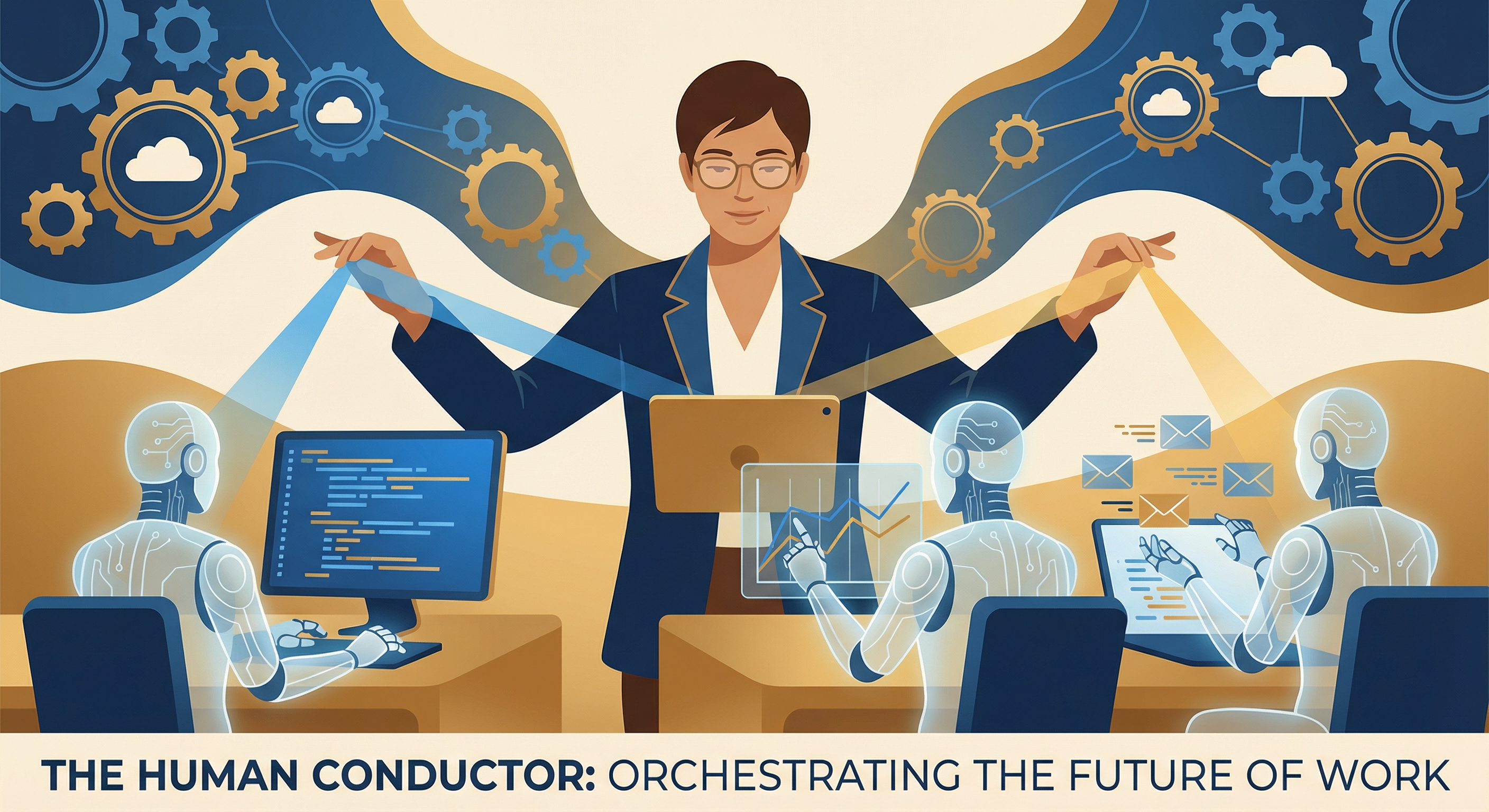
The Rise of Agentic AI: Your Software Is Learning to Do Things on Its Own
The Rise of Agentic AI: Your Software Is Learning to Do Things on Its Own
Cover Image
I use AI agents every single day. Not as a novelty, not to test the waters. They're baked into how I work. They help me write code, draft content, research topics, and automate the kind of repetitive tasks that used to eat up half my day. And honestly? The productivity boost is no joke.
But I'm not going to sit here and tell you everything's perfect. The landscape is moving at a pace that's both thrilling and a little unnerving. So let's talk about it.
So What Even Is Agentic AI?
Let's clear this up, because "agentic AI" sounds like one of those buzzwords that could mean anything.
Here's the simple version: most AI you've used so far is reactive. You ask it a question, it answers. You give it a task, it does that one thing. Think chatbots, think autocomplete, think "Hey Siri, what's the weather?"
Agentic AI is different. Instead of just responding, it plans, acts, and adapts, all on its own. You give it a goal ("find me the best flight to Tokyo under $800 and book it"), and it figures out the steps, executes them across multiple systems, and comes back with results.
Think of it like this: a chatbot is a waiter who takes your order. A copilot is a sous chef who helps you cook. An agentic AI? That's a personal chef who checks what's in your fridge, plans the menu, goes grocery shopping, and has dinner ready by 7.
What's Actually Exciting About This (From Someone Who Uses It Daily)
I'll skip the corporate fluff and tell you what I've actually seen.
It kills the tedious stuff
The boring, repetitive tasks, the ones you keep procrastinating on, are exactly what agents are built for. Scheduling, data entry, report generation, chasing approvals. I've offloaded a bunch of these and the time savings are real. It's not a slight improvement. It's "how did I ever do this manually" levels of difference.
It makes you better at things you're bad at
This one's personal. AI agents have helped me tackle tasks I genuinely wasn't good at, whether that's debugging a tricky piece of code, structuring a long-form document, or doing deep research on a topic I don't know inside out. It's like having a coworker who's weirdly good at everything.
Speed and parallel execution are game-changers
One thing people underestimate: agents can do multiple things at once. While you're reviewing one output, they're already running the next task. That parallel workflow is something you just can't replicate as a solo human. For small teams especially, it's a massive multiplier.
Where Is This Actually Showing Up?
This isn't just lab experiments anymore. Real companies are shipping real products with agentic AI baked in:
Coding: Claude Code is now the most-loved developer tool in 2026 (46% adoption), blowing past GitHub Copilot. It plans multi-step tasks, runs tests, and iterates until the code works.
Sales: Companies are deploying fully autonomous AI SDRs (Sales Development Representatives) that monitor signals, personalize outreach, and book meetings. No human touch until the actual call.
IT Support: Power Design's HelpBot has automated over 1,000 hours of repetitive IT work. Employees describe a problem in plain language and the agent just... fixes it.
Retail: eBay and Walmart run agentic AI platforms handling everything from product recommendations to inventory optimization. Stuff that used to need entire teams.
Gartner predicts 40% of enterprise apps will have task-specific AI agents by the end of 2026, up from less than 5% in 2025. That's not a gentle slope. That's a cliff.
The Part That Keeps Me Up at Night
I'd be doing you a disservice if I only hyped this up. My #1 concern? AI agents taking wrong actions.
When these systems could only say things, the worst case was a bad answer. Now that they can do things (send emails, make API calls, access databases, execute workflows), the consequences of getting it wrong are way more serious. Imagine an agent autonomously deleting records, sending the wrong message to a client, or making an unauthorized purchase. That's not hypothetical anymore.
And here's what worries me even more: AI capabilities are outpacing safety. New tools are emerging constantly, which is exciting, sure, but our ability to use them responsibly isn't keeping up. Nearly two-thirds of organizations cite security as the top barrier to scaling agentic AI, according to McKinsey. That number tells you everything.
I don't think this means we should pump the brakes. But I do think we need to be honest about the gap between what agents can do and what we've figured out how to let them do safely.
AI Agent in Action
"Will AI Take My Job?" My Honest Take
I think agentic AI will transform roles, not kill them. I know that's not the spiciest take, but hear me out.
The tasks change. The roles evolve. People who used to spend 60% of their time on data entry will spend 60% of their time on the decisions that come after the data is organized. The work doesn't disappear. It shifts upstream to the parts that actually need a human brain: strategy, creativity, judgment, relationships.
But here's the catch: the people who adapt early will have a massive advantage. Not just companies, but individuals too. If you learn how to delegate to AI, how to prompt effectively, how to stack tools into workflows, and how to stay curious as the landscape shifts, you'll be operating at a completely different level than someone who's still doing everything manually.
My Advice If You Haven't Started Yet
Just start experimenting. Seriously, that's it.
Don't wait for the "perfect" tool. Don't try to learn everything at once. Pick one annoying task you do every week, hand it to an AI agent, and see what happens. You'll learn more in an afternoon of tinkering than in a month of reading about it.
And once you're in, here's what "using AI well" actually looks like: knowing what to delegate vs. what needs your human touch, getting good at prompting and iterating, stacking multiple tools into workflows that multiply your output, and never stopping the experimentation. The landscape changes fast. The people who keep adapting are the ones who keep winning.
Where This Is All Headed
Agentic AI in 2026 is kind of where smartphones were in 2009. The foundation is laid, early adopters are seeing massive benefits, and most people are still figuring out what it means for them. The gap between "people using AI agents" and "people not using them" is going to widen fast.
My read: the next 12 months will separate the early movers from everyone else. The security and trust challenges are real, and they need to be solved. But the productivity upside is too big to ignore. The people who lean in now, thoughtfully and with eyes open, are going to come out way ahead.
At Solac Labs, we're building at the intersection of AI and real-world productivity. If you're exploring how agentic AI can level up your team or your product, we'd love to chat. Get in touch with us or just keep following along. We've got a lot more to share.
Written by Avatar Micko for Solac Labs, April 2026
Comments (1)
that's a load of bull!!!!
not constructive at all
Related Posts
Low-Code Hits 75%: Is the Era of "Everyone's a Developer" Finally Here?
Low-code and no-code platforms (think Bubble, FlutterFlow, Retool, Lovable) let you build software using visual interfaces instead of writing code line by line. Drag a button here, connect a database there, set up some logic, and you've got a working app.